
What should I gather before sending the books for tax preparation?
Start with complete statements, reconciled books, year-end financial reports, payroll records, asset and loan details, owner transactions and relevant prior returns. Include unresolved questions instead of quietly guessing at their treatment.
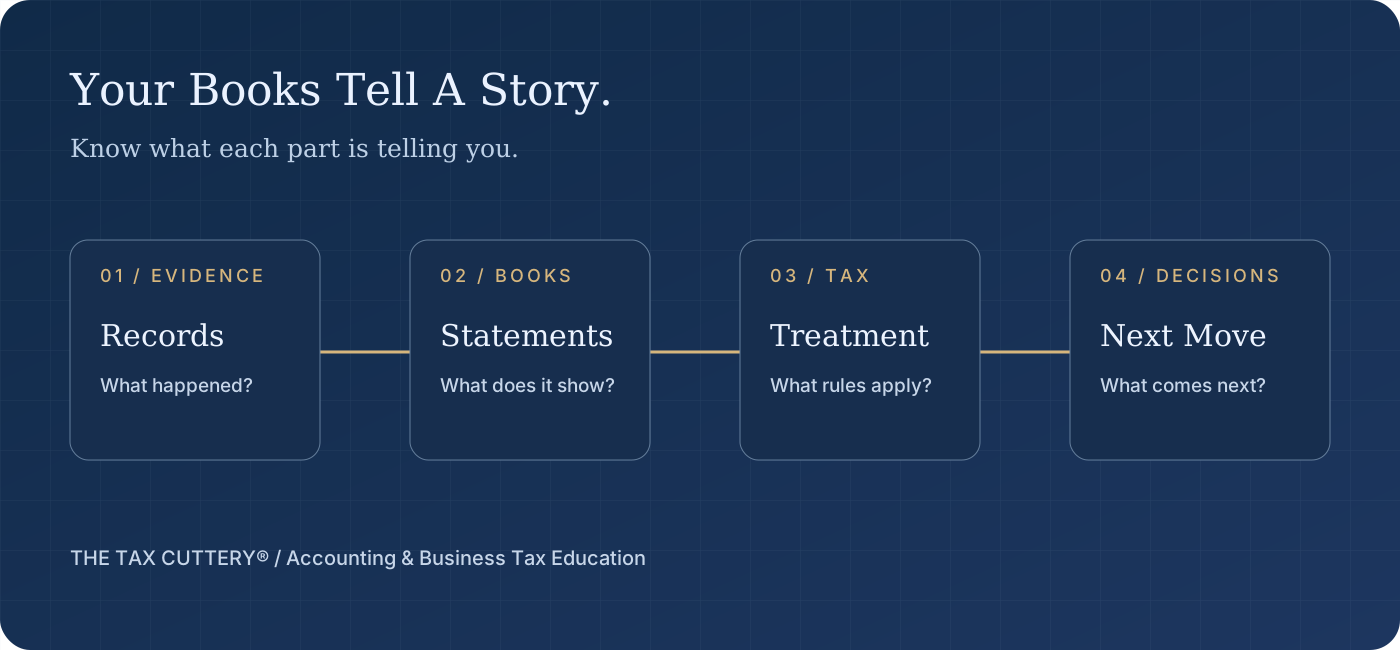
A P&L Is The Cover Sheet
The profit and loss statement is a useful summary, but the file behind it explains what the totals mean. Include the balance sheet, reconciliation reports and supporting schedules. Identify the reporting period, entity and accounting basis so everyone starts from the same version of the story.
Explain The Changes
New equipment, a vehicle sale, a refinance, an owner loan or a change in ownership can matter beyond the day it appears in the bank feed. Keep the agreements and closing records. Do not assume last year’s tax treatment automatically fits a different transaction this year.
Leave A Visible Question List
If an amount is unresolved, identify it. Separate missing documents from classification questions and from balances that do not reconcile. That lets the firm determine what cleanup or research must be scoped before return preparation. A visible question is easier to resolve than an unsupported answer.
Use The Consultation To Set The Work
The free initial consultation gathers the context behind the organizer: what changed, what concerns you and what work may be needed. Genesis is the next records-gathering path when appropriate. Bookkeeping cleanup, return preparation, written analysis and paid Tax Advisory time are separately scoped.
Bring These Questions Into The File.
- Year-end reports and all account statements
- Payroll and information-return records
- Asset purchases, disposals and debt changes
- Ownership changes and unresolved questions
Read The Primary Sources.
IRS references for the federal tax and recordkeeping distinctions. Examples on this page are educational, not a determination of your tax treatment.
IRS: Recordkeeping ↗IRS: Starting A Business And Keeping Records ↗