
What should small business bookkeeping actually tell me?
Useful bookkeeping explains what the business earned, what it spent, what it owns, what it owes and how transactions connect to supporting records. Downloading a bank feed is only one part of that process.
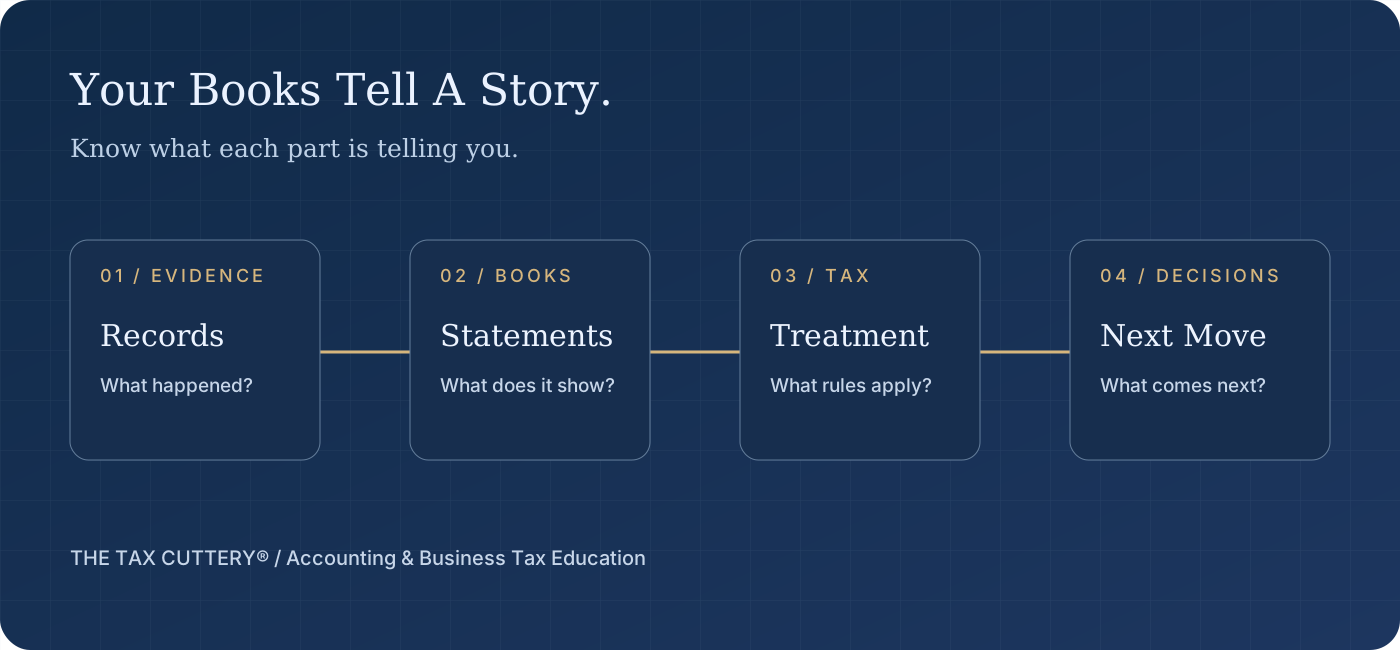
Start With A Repeatable Close
Choose a regular closing date and work from complete statements for every business bank account, credit card and payment processor. Match the records to those statements. Investigate unexplained differences instead of creating a balancing entry that hides them. A clean ending balance should have an explanation you can follow next month.
Give Each Transaction Its Proper Job
A deposit could be a customer payment, a loan or money the owner contributed. Those entries may increase the same bank balance while doing very different things in the books. A withdrawal could be an operating expense, a principal payment, an asset purchase or an owner withdrawal. Its destination does not settle its accounting or tax treatment.
Keep The Evidence With The Entry
Connect invoices, receipts, loan statements and business-purpose notes to the transactions they explain. Keep personal spending distinct. The IRS recordkeeping guidance describes records that support the return; your working file should also help you answer ordinary questions about customers, suppliers and money.
Make The Close A Decision Point
Read the profit and loss statement alongside the balance sheet and a cash explanation. Compare outstanding customer invoices, upcoming bills and the tax reserve before moving money out. If the books are behind, gather the statements first and ask the firm to scope the cleanup. The first useful deliverable is a dependable starting point.
Bring These Questions Into The File.
- Complete statements for every business account
- Receipts, invoices and explanations for unusual entries
- A list of unresolved differences
- Current receivables, payables and loan balances
Read The Primary Sources.
IRS references for the federal tax and recordkeeping distinctions. Examples on this page are educational, not a determination of your tax treatment.
IRS: Recordkeeping ↗IRS: Starting A Business And Keeping Records ↗