How can my business show a profit but have little cash?
Profit measures revenue and expenses under the accounting method used. Cash flow measures money moving in and out. Collections, borrowing, equipment purchases, debt principal and owner transactions can make the two figures differ.
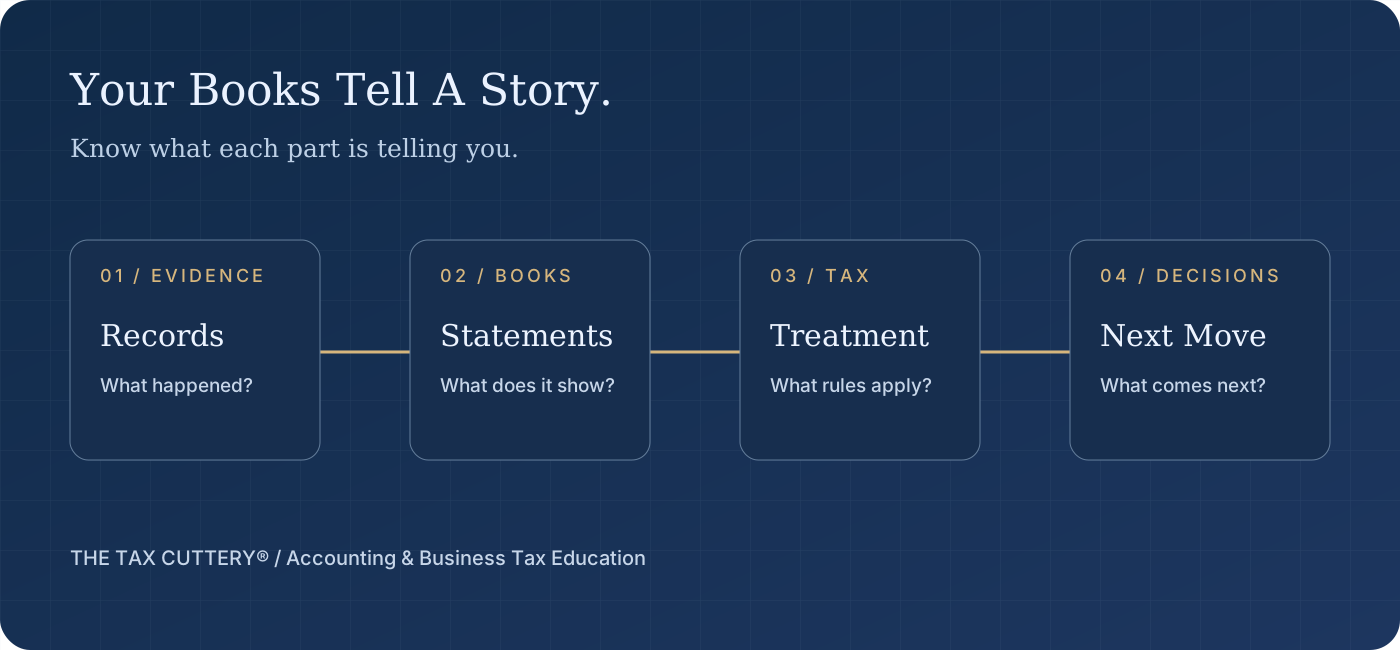
Three Questions. Three Different Numbers.
What did we earn? What cash moved? What income belongs on the tax return? Those questions overlap, but they are not interchangeable. A profit and loss statement is useful when you know its accounting basis. A bank balance is useful when you know the obligations that still have to be paid.
Follow The Cash Bridge
Begin with the reported profit and identify what explains the difference in cash. Depending on the method, that bridge can include unpaid invoices, unpaid bills, noncash expenses, borrowing, asset purchases and owner transactions. A single month can look strong on one measure and tight on another.
Borrowing Is Not A Sales Strategy
A loan increases available cash and creates a liability; it does not turn into customer revenue merely because it arrived in the operating account. Repaying principal uses cash while reducing that obligation. Interest and principal need their own treatment. Similarly, an equipment payment does not by itself establish the tax deduction available.
Plan From The Explanation
Before deciding what to pay yourself, identify the next payroll, supplier obligations, debt payments and tax needs. A useful planning conversation starts with a cash bridge and an accurate file. A bigger bank balance is pleasant. Knowing what part of it is available is considerably more useful.
Bring These Questions Into The File.
- Profit and loss statement with its accounting basis
- Beginning and ending cash balances
- Loan, asset and owner transaction details
- Unpaid customer invoices and upcoming obligations
Read The Primary Sources.
IRS references for the federal tax and recordkeeping distinctions. Examples on this page are educational, not a determination of your tax treatment.
IRS: Starting A Business And Keeping Records ↗IRS: Accounting Periods And Methods ↗