What does a balance sheet show?
A balance sheet shows assets, liabilities and equity at a point in time. Its basic equation is assets equal liabilities plus equity. It complements the profit and loss statement, which describes activity over a period.
A Photograph, Not A Movie
The balance sheet is dated. It describes the position at that moment rather than sales over the whole year. Cash, customer balances, equipment, unpaid bills, loans and owner accounts tell you what is still sitting in the business after the period’s activity.
A Balanced Statement Can Still Be Wrong
The equation can balance even when a loan is misclassified or an unexplained amount sits in an owner account. Reconcile material balances to the underlying statements and schedules. Ask what supports the number, not simply whether the two sides add up.
Watch The Owner Accounts
Owner contributions, distributions, loans and reimbursements should have a reason and documentation. An equity balance is not automatically the owner’s tax basis. Nor does a label in the software prove that a transfer is a genuine loan. Entity-specific analysis belongs in the tax file.
Read It Beside The Profit And Loss
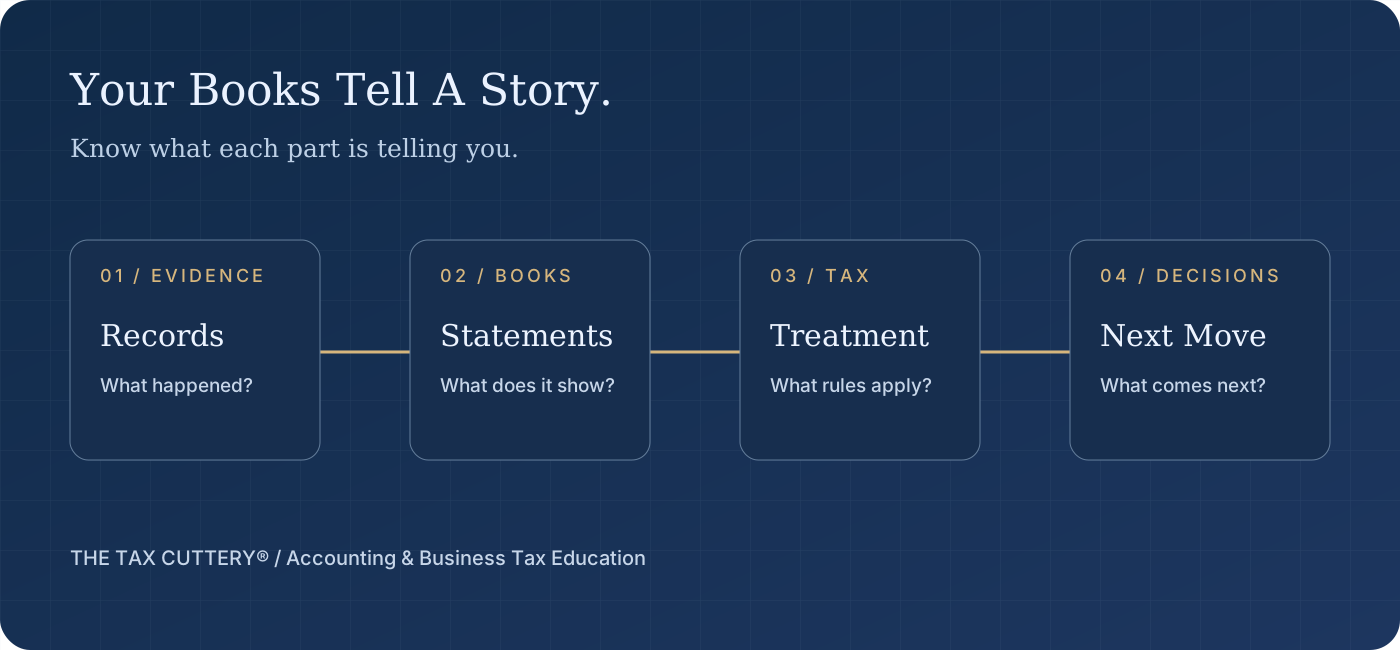
Profit can improve equity, but borrowing, contributions and withdrawals also change the position. Look at the statements together before assuming that profit is available cash. When requesting help, bring both statements and the schedules behind unusual balances.
Bring These Questions Into The File.
- Balance sheet as of a specific date
- Reconciled cash and credit card balances
- Loan statements and asset schedules
- Support for owner and related-party balances
Read The Primary Sources.
IRS references for the federal tax and recordkeeping distinctions. Examples on this page are educational, not a determination of your tax treatment.
IRS: Starting A Business And Keeping Records ↗IRS: Recordkeeping ↗